Why Metal Gaskets Remain Critical in High-Risk Industrial Operations
In industrial environments where failure is not an option, sealing performance plays a decisive role in safety, efficiency, and long-term reliability. Despite advances in soft gasket materials and sealing technologies, metal gaskets continue to be the preferred choice for applications involving extreme pressure, temperature, and aggressive process media.
Their relevance is not driven by tradition alone, but by proven performance in conditions where conventional sealing solutions fall short.
The Role of Metal Gaskets in Process Safety
Metal gasket are widely used in industries such as oil and gas, petrochemical processing, power generation, and heavy engineering, where system integrity directly impacts operational safety. In these sectors, leaks can lead to equipment damage, environmental hazards, and costly downtime.
Unlike soft gaskets, metal gaskets maintain structural stability under high compressive loads. Their ability to withstand pressure spikes, thermal cycling, and vibration makes them an essential sealing component in critical joints, particularly in heat exchangers, reactors, and pressure vessels.
Performance Under Extreme Conditions
One of the defining advantages of metal gaskets is their ability to perform consistently across a wide temperature range. From cryogenic services to applications exceeding 1000°C, metal-based sealing solutions retain their integrity where elastomeric or fiber gaskets degrade.
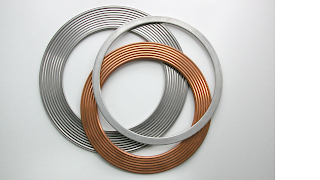
Additionally, metal gaskets offer superior resistance to aggressive chemicals. By selecting appropriate alloys such as stainless steel, Monel, or Inconel, engineers can ensure compatibility with corrosive media, reducing the risk of gasket failure and flange damage over time.
Long-Term Reliability and Reduced Maintenance
In high-risk industrial systems, frequent maintenance is both expensive and disruptive. Metal gaskets contribute to extended service intervals due to their durability and resistance to creep, relaxation, and blowout.
While they often require higher seating stress during installation, the long-term benefits include reduced leak paths, stable sealing performance, and improved joint reliability. For applications where shutdowns are costly, this reliability is a key factor in gasket selection.
Customization for Complex Industrial Equipment
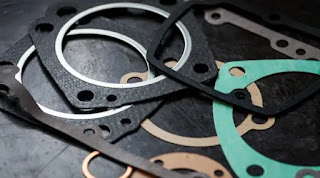
Modern industrial equipment rarely follows a one-size-fits-all design. Metal gaskets can be custom-fabricated to accommodate large diameters, complex geometries, and specialized configurations such as pass partition bars in heat exchangers.
This flexibility allows metal gaskets to be tailored to specific operational requirements, ensuring optimal performance even in non-standard or legacy systems where replacement options are limited.
Compliance With Industry Standards
Another reason metal gaskets remain indispensable is their alignment with international standards. Specifications such as ASME B16.20, ASME B16.5, and related codes define dimensional accuracy, material selection, and performance expectations for metal gasket applications.
Compliance with these standards ensures consistency, safety, and interchangeability across global industrial operations, reinforcing the role of metal gaskets as a trusted sealing solution.
Why Metal Gaskets Continue to Matter
As industries push toward higher efficiencies, higher pressures, and more demanding operating conditions, sealing requirements become increasingly critical. Metal gaskets offer a combination of strength, stability, and adaptability that few other sealing technologies can match.
Rather than being replaced, metal gaskets continue to evolve through improved materials, manufacturing techniques, and application-specific designs. Their continued use is not a matter of legacy, but of necessity in environments where performance and safety cannot be compromised.
Comments
Post a Comment