Spiral Wound Gasket in Refineries: Why It’s the Industry Standard for Critical Sealing
- Get link
- X
- Other Apps
In refinery operations, equipment runs under extreme temperatures, high pressure, and aggressive chemical exposure. Sealing failure can lead to production losses, safety hazards, and costly shutdowns. This is why the spiral wound gasket has become the preferred sealing solution in refineries worldwide.
Let’s explore why spiral wound gaskets dominate refinery applications and what makes them uniquely reliable.
What Is a Spiral Wound Gasket?
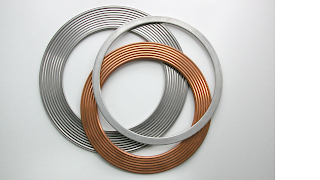
A spiral wound gasket is a semi-metallic gasket made by winding a metal strip and a soft filler material together in a spiral pattern. The metal strip provides strength and resilience, while the filler material ensures sealing and adaptability to flange imperfections.
Common materials include:
-
Stainless steel windings
-
Graphite filler
-
PTFE filler
-
Inner and outer guide rings
This layered design gives the gasket flexibility along with structural stability.
Why Refineries Prefer Spiral Wound Gaskets
1. Excellent Recovery and Resilience
Refinery pipelines and vessels experience thermal expansion and pressure fluctuations. Spiral wound gaskets recover after compression, maintaining a tight seal even during cycling conditions.
2. High Temperature and Pressure Capability
These gaskets perform reliably in steam lines, hydrocarbon processing units, and high-pressure reactors.
3. Chemical Resistance
With graphite or PTFE fillers, spiral wound gaskets resist corrosive chemicals, acids, and hydrocarbons commonly found in refining processes.
4. Blowout Resistance
The metal winding construction reduces the risk of gasket extrusion or blowout under extreme pressure.
Common Refinery Applications
Spiral wound gaskets are widely used in:
-
Heat exchangers
-
Distillation columns
-
Pressure vessels
-
Steam pipelines
-
Pump and valve connections
They are particularly common in raised face and flat face flange assemblies.
Design Features That Improve Performance
Inner Ring
Prevents inward buckling and protects the winding from process fluids.
Outer Ring
Acts as a compression limiter and ensures proper gasket centering during installation.
Filler Material Selection
Graphite is preferred for high-temperature service, while PTFE is ideal for chemical processing applications.
Safety and Compliance
Refineries operate under strict international standards. Spiral wound gaskets are commonly manufactured according to ASME B16.20 specifications, ensuring dimensional accuracy and performance reliability.
Their consistent sealing performance helps prevent leaks of flammable or hazardous fluids, supporting both operational safety and environmental protection.
Long-Term Cost Efficiency
Although spiral wound gaskets may cost more than basic soft gaskets, their durability and reliability reduce:
-
Maintenance frequency
-
Unexpected downtime
-
Leak-related repairs
-
Safety risks
This makes them a cost-effective solution over the long term.
Conclusion
In refinery environments where performance and safety are non-negotiable, spiral wound gaskets deliver unmatched reliability. Their unique combination of metallic strength and compressible filler material makes them ideal for high-pressure, high-temperature, and chemically aggressive applications.
For critical industrial sealing, spiral wound gaskets remain the trusted standard across the refining industry.
- Get link
- X
- Other Apps
Comments
Post a Comment