The Definitive Guide to Spiral Wound Gaskets (SWG)
In the world of industrial sealing, the Spiral Wound Gasket (SWG) is widely regarded as the most versatile and reliable semi-metallic seal. Designed to handle the "breathing" of pipelines—thermal cycling, pressure surges, and vibration—the SWG is the standard choice for high-pressure refineries and power plants.
This guide covers everything from construction to selection.
1. Anatomy of a Spiral Wound Gasket
A Spiral Wound Gasket isn't just a single piece of material; it is an engineered composite consisting of three main components:
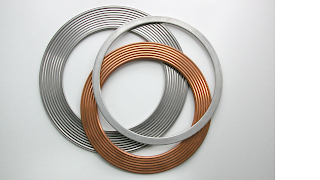
The Sealing Element: A continuous V-shaped metal strip (the "winding") spirally wound with a soft filler material (Graphite, PTFE, or Mica). The V-shape acts like a spring, providing high resilience.
The Inner Ring: A solid metal ring that prevents "inward buckling" of the windings under high bolt loads. It also acts as a heat shield and minimizes fluid turbulence.
The Outer (Centering) Ring: A solid metal ring that centers the gasket on the flange face. It also provides additional radial strength to prevent the gasket from blowing out.
2. Common Types of SWG
Depending on the flange type, you must choose the correct configuration:
| Type | Components | Best For |
| Type R | Sealing Element only | Tongue & Groove or Male/Female flanges. |
| Type RW | Sealing Element + Outer Ring | Standard Raised Face (RF) flanges. |
| Type RWI | Sealing Element + Outer Ring + Inner Ring | The Industry Standard. Required for high-pressure/temp and vacuum services. |
3. Material Selection: The "Big Three"
Choosing the right metal and filler is critical for longevity.
Common Metals:
Stainless Steel (304/316L): Standard for most industrial applications.
Carbon Steel: Usually reserved for the outer ring only (zinc-plated for corrosion resistance).
Monel/Inconel/Hastelloy: For highly corrosive or ultra-high-temperature environments.
Common Fillers:
Flexible Graphite: The "go-to" for high temperatures (up to 450°C to 500°C) and most chemicals.
PTFE: Used for aggressive chemicals and lower temperatures where 100% inertness is required.
Mica/Graphite: For extreme heat applications (up to 1000°C).
4. Why Use a Spiral Wound Gasket?
Why choose an SWG over a simple rubber or metal gasket?
Resilience: The V-shaped metal windings act as a spring, automatically adjusting to changes in pressure and temperature.
Blow-out Resistance: The solid outer ring makes it nearly impossible for the gasket to be forced out of the joint.
Tolerance: They are more forgiving of slightly irregular flange surfaces than solid metal gaskets.
5. Installation Best Practices
Even the best Asian Sealing SWG will fail if installed poorly. Follow these "Golden Rules":
Never Re-use: A used SWG has already been "crushed" to create a seal and won't have the spring-back needed for a second use.
Check the "Color Code": SWGs are color-coded on the outer rim (e.g., Green for SS316, Yellow for SS304). Always verify the material before installation.
The Star Pattern: Tighten bolts in a cross-over (star) pattern to ensure the gasket is compressed evenly. Uneven compression is the #1 cause of SWG failure.
6. Standards to Look For
Ensure your SWG meets international standards to guarantee safety:
ASME B16.20: The primary standard for metallic gaskets for pipe flanges.
API 6A: For high-pressure wellhead equipment.
Conclusion
The Spiral Wound Gasket is the backbone of modern industrial fluid handling. By understanding the interaction between the metal windings, the filler, and the guide rings, you can ensure a zero-leak environment for your facility.
Need high-precision Spiral Wound Gaskets for your next turnaround? Explore the full range of materials and sizes at
Comments
Post a Comment